copyright 2005-2017 Jonathan Whitcomb

Pterosaurs
Still Living
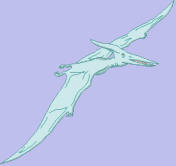
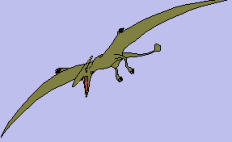
An American Soldier Sees a “Pterodactyl”
Does a living pterodactyl fly over Papua New Guinea?
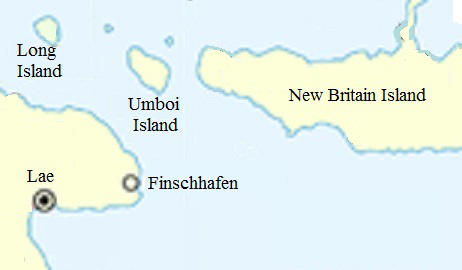
Ropen Sighting in 1944
During World War II, an American soldier
walked into a clearing near Finschhafen (New
Guinea) with his buddy. Soon after entering
the clearing, a wild pig (probably startled by
the men) ran through the grass.
That pig running through the jungle clearing
was probably what startled a creature that
then starting running and flapping its wings.
It flew up out of the clearing and away over
the trees. The two soldiers were talking about
what it could have been when it flew back
over the clearing, giving them another chance
to look it over.
Hodgkinson was fascinated by the long horn-
like appendage coming out of the back of the
head of the huge flying creature. He centered
his attention on the head of the “pterodactyl,”
so he did not notice what other eyewitnesses
have seen: a diamond-shaped flange at the
end of the tail.
During interviews, years after the sighting,
the American World War II veteran gave an
estimate of the wingspan of the apparent
pterosaur: similar to that of a Piper-Tri Pacer
airplane (about 29 feet). Take that estimate
in perspective: The jungle clearing the two
men were in was about 100 feet in diameter.
That makes it less likely that Hodgkinson
grossly over-estimated the wingspan.
Background on the Sighting
In 1944, during World War II, what was
known as “New Guinea” was not yet a
nation. It would be decades before the
independence of Papua New Guinea
would be established. When the two
American soldiers saw the “pterodactyl”
in that jungle clearing, they had no need
to worry about Japanese soldiers, for
the enemy had left that area.
Duane Hodgkinson and his army buddy
had obtained permission to visit a village
west of Finschhafen. On the way, the
local native guide had gone ahead as the
two Americans looked at some large ants
in a jungle clearing.
At this time, Hodgkinson was a weather
observer for the field artillery. During part
of his youth, he had lived in a farm in the
state of Ohio. In the early 21st century, when
he was being interviewed by Jonathan D.
Whitcomb and Garth Guessman, he told
them that the jungle clearing, where he and
his buddy saw the “pterodactyl,” was about
100 feet in diameter. Taking all these things
in perspective together, that field was most
likely close to that size.
Years after the sighting, after he had owned
a Piper Tri-Pacer airplane, he estimated that
the wingspan of the flying creature was about
the wingspan of that kind of plane.
Eyewitness Credibility
Whitcomb noted that Hodgkinson’s deportment
during the videotaped interview and his demeanor
while describing his sighting suggested that he
was mentally healthy and honestly described a
real experience. He is one of a number of reliable
eyewitnesses.
Whitcomb was a forensic videographer working
independently for attorney firms in Southern
California. He has more than an average ability
to judge eyewitness credibility, and he put this
skill to use during his ropen expedition in 2004.
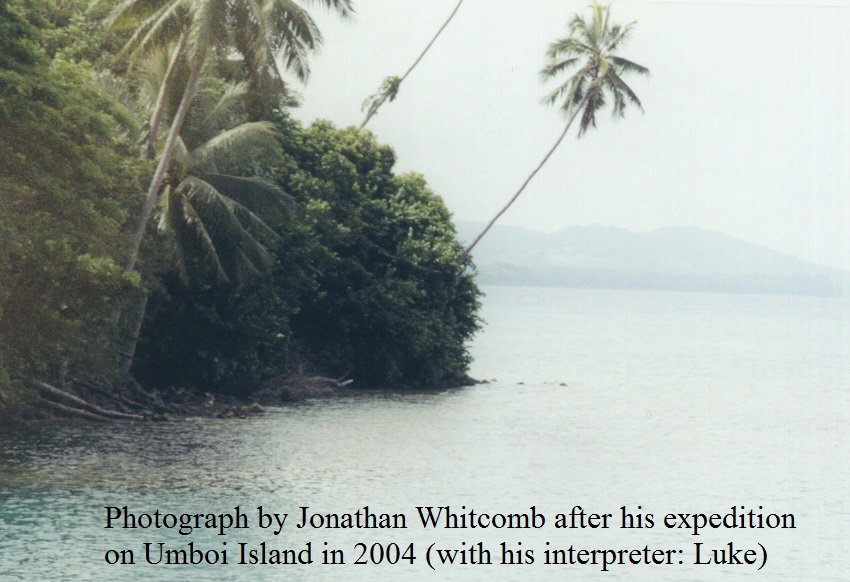
Finschhafen Harbor,
Papua New Guinea
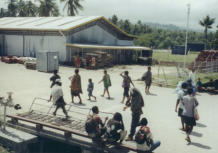
Photo by Jonathan Whitcomb,
2004: Finschhafen Harbor
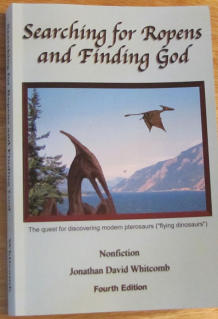
Read about Duane Hodgkinson and
many other eyewitnesses of living
pterosaurs in Papua New Guinea.
Get your own copy of the nonfiction
book Searching for Ropens and
Finding God, fourth edition.
The author, Jonathan Whitcomb,
also tells how he worked with
other Christians in searching for
living pterosaurs. They had faith
in the Bible, as they searched for
the ropen of Umboi Island.
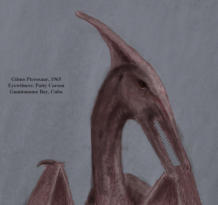
This ropen, seen in Cuba in 1965,
may be related to the pterosaur seen
in 1944 by the American soldiers
near Finschhafen, New Guinea.
The late Duane Hodgkinson’s sighting was near
Finschhafen. His report of the encounter has
made a great contribution to the cryptozoological
investigations of the ropen of the southwest Pacific.
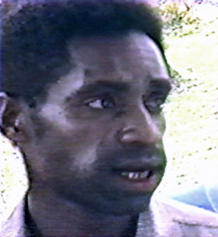
This native testified that he had
personal knowledge of ropens and
that they catch fish.
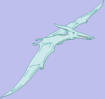
Jonathan Whitcomb gave the World War II veteran
a series of silhouette sketches for determining some
details that could be used to make a composite
sketch. These included head-crest length, beak
sharpness, and neck length:
PSL-A: Head-crest length
PSL-C: Confirming appendage length
PSL-E: Sharpness of the mouth / beak
PSL-F: Length of the neck
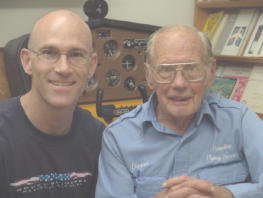
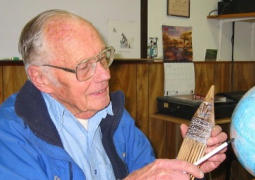
The cryptozoologist Garth Guessman (left)
interviewed Duane Hodgkinson in 2005, and
the interview was videotaped. It’s now free to
watch on Youtube and is very popular.
copyright 2005-2017 Jonathan Whitcomb
Pterosaurs
Still Living


Finschhafen Harbor,
Papua New Guinea
An American Soldier
Sees a “Pterodactyl”
Does a living pterodactyl fly
over Papua New Guinea?
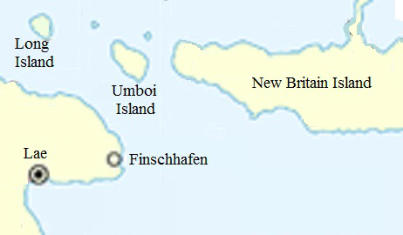
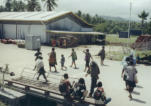
Photo by Jonathan
Whitcomb, 2004:
Finschhafen Harbor
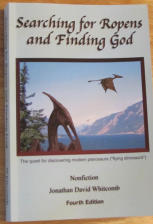
Read how Duane Hodgkinson
and many other eyewitnesses
have seen living pterosaurs in
Papua New Guinea. Get your
own copy of the nonfiction
book Searching for Ropens
and Finding God, 4th edition.
The author, Jonathan David
Whitcomb, also tells how he
worked with other Christians
in searching for living ptero-
saurs. They had faith in the
Bible, as they searched for
the ropen of Umboi Island.
Ropen Sighting in 1944
During World War II, an American soldier walked into a clearing
near Finschhafen (New Guinea) with his buddy. Soon after
entering the clearing, a wild pig (probably startled by the men)
ran through the grass.
That pig running through the jungle clearing probably startled a
creature that then starting running and flapping its wings. It flew
up out of the clearing and away over the trees. The two soldiers
were talking about what it could have been when it flew back
over the clearing, giving them another chance to look it over.
Hodgkinson was fascinated by the long horn-like appendage
coming out of the back of the head of the huge flying creature.
He centered his attention on the head of the “pterodactyl,” so he
did not notice what other eyewitnesses have seen: a diamond-
shaped flange at the end of the tail.
During interviews, years after the sighting, the American World
War II veteran gave an estimate of the wingspan of the apparent
pterosaur: similar to that of a Piper-Tri Pacer airplane (about 29
feet). Take that estimate in perspective: The jungle clearing the
two men were in was about 100 feet in diameter. That makes it
less likely that Hodgkinson grossly over-estimated the wingspan.
Background on the Sighting
In 1944, during World War II, what was then known as “New
Guinea” was not yet a nation. It would be decades before the
independence of Papua New Guinea would be established.
When the two American soldiers saw the “pterodactyl” in that
jungle clearing, they had no need to worry about Japanese
soldiers, for the enemy had left that area.
Duane Hodgkinson and his army buddy had obtained permission
to visit a village west of Finschhafen. On the way, the local native
guide had gone ahead as the two Americans looked at some large
ants in a jungle clearing.
At this time, Hodgkinson was a weather observer for the field
artillery. During part of his youth, he had lived in a farm in the
state of Ohio. In the early 21st century, when he was being inter-
viewed by Jonathan D. Whitcomb and Garth Guessman, he told
them that the jungle clearing, where he and his buddy saw the
“pterodactyl,” was about 100 feet in diameter. Taking all these
things in perspective together, that field was most likely close
to that size.
Years after the sighting, after he had owned a Piper Tri-Pacer
airplane, he estimated that the wingspan of the flying creature
was about the wingspan of that kind of plane.
Eyewitness Credibility
Whitcomb noted that Hodgkinson’s deportment during the
videotaped interview and his demeanor while describing his
sighting suggested that he was mentally healthy and honestly
described a real experience. He is one of a number of reliable
eyewitnesses.
Whitcomb was a forensic videographer working independently
for attorney firms in Southern California. He has more than an
average ability to judge eyewitness credibility, and he put this
skill to use during his ropen expedition in 2004.
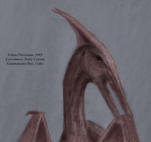
This ropen, seen in Cuba in
1965, may be related to the
pterosaur seen in 1944 by
the American soldiers near
Finschhafen, New Guinea.

This native testified that he
had personal knowledge of
ropens: They catch fish.

The late Duane Hodgkinson’s
sighting was near Finschhafen.
His report of the encounter
has made a great contribu-
tion to the cryptozoological
investigations of the ropen of
the southwest Pacific.
Jonathan Whitcomb gave the World War II veteran a series of
silhouette sketches for determining some details that could be
used to make a composite sketch. These included head-crest
length, beak sharpness, and neck length:
PSL-A: Head-crest length
PSL-C: Confirming appendage length
PSL-E: Sharpness of the mouth / beak
PSL-F: Length of the neck
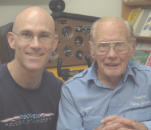
The cryptozoologist Garth
Guessman (left) interviewed
Duane Hodgkinson in 2005,
and the interview was video-
taped. It’s now free to watch
on Youtube; it’s very popular.

copyright 2005-2017 Jonathan Whitcomb
Pterosaurs
Still
Living
An American Soldier
Sees a “Pterodactyl”
Does a living pterodactyl fly
over Papua New Guinea?
Finschhafen Harbor, Papua New Guinea

Photo by Jonathan Whitcomb, 2004: Finschhafen Harbor

Ropen Sighting in 1944
During World War II, an American soldier walked into a clearing
near Finschhafen (New Guinea) with his buddy. Soon after
entering the clearing, a wild pig (probably startled by the men)
ran through the grass.
That pig running through the jungle clearing probably startled a
creature that then starting running and flapping its wings. It flew
up out of the clearing and away over the trees. The two soldiers
were talking about what it could have been when it flew back
over the clearing, giving them another chance to look it over.
Hodgkinson was fascinated by the long horn-like appendage
coming out of the back of the head of the huge flying creature.
He centered his attention on the head of the “pterodactyl,” so he
did not notice what other eyewitnesses have seen: a diamond-
shaped flange at the end of the tail.
During interviews, years after the sighting, the American World
War II veteran gave an estimate of the wingspan of the apparent
pterosaur: similar to that of a Piper-Tri Pacer airplane (about 29
feet). Take that estimate in perspective: The jungle clearing the
two men were in was about 100 feet in diameter. That makes it
less likely that Hodgkinson grossly over-estimated the wingspan.
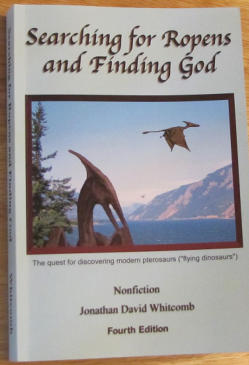
Read how Duane Hodgkinson and many other eyewitnesses have
seen living pterosaurs in Papua New Guinea. Get your own copy
of the nonfiction book Searching for Ropens and Finding God,
4th edition.
The author, Jonathan David Whitcomb, also tells how he worked
with other Christians in searching for living pterosaurs. They had
faith in the Bible, as they searched for the ropen of Umboi Island.
Background on the Sighting
In 1944, during World War II, what was then known as
“New Guinea” was not yet a nation. It would be decades
before the independence of Papua New Guinea would be
established. When the two American soldiers saw the
“pterodactyl” in that jungle clearing, they had no need to
worry about Japanese soldiers: The enemy had left that area.
Duane Hodgkinson and his army buddy had obtained
permission to visit a village west of Finschhafen. On the
way, the local native guide had gone ahead as the two
Americans looked at some large ants in a jungle clearing.
At this time, Hodgkinson was a weather observer for the
field artillery. During part of his youth, he had lived in a
farm in the state of Ohio. In the early 21st century, when
he was being interviewed by Jonathan D. Whitcomb and
Garth Guessman, he told them that the jungle clearing,
where he and his buddy saw the “pterodactyl,” was about
100 feet in diameter. Taking all these things in perspective
together, that field was most likely close to that size.
Years after the sighting, after he had owned a Piper Tri-Pacer
airplane, he estimated that the wingspan of the flying creature
was about the wingspan of that kind of plane.
Eyewitness Credibility
Whitcomb noted that Hodgkinson’s deportment during the
videotaped interview and his demeanor while describing
his sighting suggested that he was mentally healthy and
honestly described a real experience. He is one of a number
of reliable eyewitnesses.
Whitcomb was a forensic videographer working for
attorney firms in Southern California. He has more than
an average ability to judge eyewitness credibility, and he
put this skill to use during his ropen expedition in 2004.

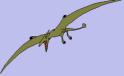
This ropen, seen in Cuba in 1965, may be related to the
pterosaur seen in 1944 by the American soldiers near
Finschhafen, New Guinea.
This native testified that he
had personal knowledge of
ropens: They catch fish.
The late Duane Hodgkinson’s
sighting was near Finschhafen.
His report of the encounter
has made a great contribu-
tion to the cryptozoological
investigations of the ropen of
the southwest Pacific.
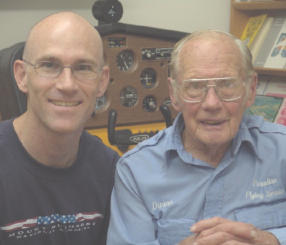
The cryptozoologist Garth Guessman (left) interviewed
Duane Hodgkinson in 2005, and the interview was video-
taped. It’s now free to watch on Youtube; it’s very popular.
Jonathan Whitcomb gave the World War II veteran a series of
silhouette sketches for determining some details that could be
used to make a composite sketch. These included head-crest
length, beak sharpness, and neck length:
PSL-A: Head-crest length
PSL-C: Confirming appendage length
PSL-E: Sharpness of the mouth / beak
PSL-F: Length of the neck
